

Most traditional financial advisors require a minimum of $250,000 to $1 million in investable assets before they will take on a client. For the roughly 70% of Americans who are not financially healthy, the threshold used by the Financial Health Network's 2025 Pulse report, that is not a minor barrier; it is simply the end of the conversation.
The debate over AI financial tools vs. human advisors has mostly played out in wealth management circles, focused on portfolio rebalancing and retirement optimization for people who already have assets to manage. That framing misses the population where the question actually matters, with workers who are not trying to optimize an investment strategy. They are simply trying to make it through the month.
For HR and benefits leaders, this distinction is the whole point. The financial wellness programs you offer either reach the employees who need them most, or they don't. Understanding where each type of guidance actually works is the first step to building a benefit that starts to elevate workforce financial health.
Human financial advisors are genuinely useful, but their business model is not designed for lower-income workers. Fee structures typically run 1% of assets under management annually, which produces nothing useful on a small account. Standalone financial plans from a certified financial planner run $2,000 to $7,500 per year. Hourly advisory sessions run $150 to $400.
For a worker making $18 an hour, a $300 advisory session is more than two days of after-tax wages. The math does not work, and most workers know it. That is why access, not interest, is the real barrier. According to the CAPTRUST 2026 Financial Wellness Survey, 98% of employees say they would use a financial advisor if one were available at no cost. Demand is not the problem.
The Federal Reserve's 2024 Survey of Household Economics and Decisionmaking puts the underlying fragility in concrete terms: 37% of adults said they could not cover a $400 emergency expense using cash or its equivalent. For that population, a conversation about portfolio rebalancing is definitely not where financial support needs to start.
Human advisors offer things AI cannot currently replicate. Judgment during market volatility, behavioral accountability and the ability to work through genuinely complex situations, such as a home purchase, an inheritance, divorce, equity compensation and estate planning, which all benefit from a relationship with someone who understands the full picture and can hold a person accountable over time.
The CAPTRUST survey found that 40% of employees ranked one-on-one advice as the most helpful resource for reducing financial worry. That preference is real and worth taking seriously. The problem is not that human advisors lack value. It is that they are structurally inaccessible to the workers who are most financially stressed.
AI-powered financial tools have brought the cost of guidance down dramatically, with consumer options often running $5 to $15 per month with no asset minimums. More importantly, the right AI tools do not just make generic advice cheaper. They make personalized guidance possible for workers who were previously getting nothing.
The distinction that matters for hourly workers is whether an AI tool is built around cash flow in real time or around investment management. Most consumer robo-advisors are optimized for the latter. An AI tool embedded in an employer's payroll infrastructure works from something more immediately useful, like live earnings data, actual spending patterns, upcoming bills and the timing gap between when wages are earned and when they are distributed.
That real-time context changes what guidance can do. According to Valoir's 2026 Employee Financial Wellness Report, the average worker spends 3.3 hours per week managing personal finances on the clock, not making investment decisions, but navigating timing problems. They are concerned with questions such as will this payment clear, can I make rent, should I pick up a second job this week. An AI tool built on live payroll data can address those questions directly. A generic chatbot or a library of financial education articles cannot.
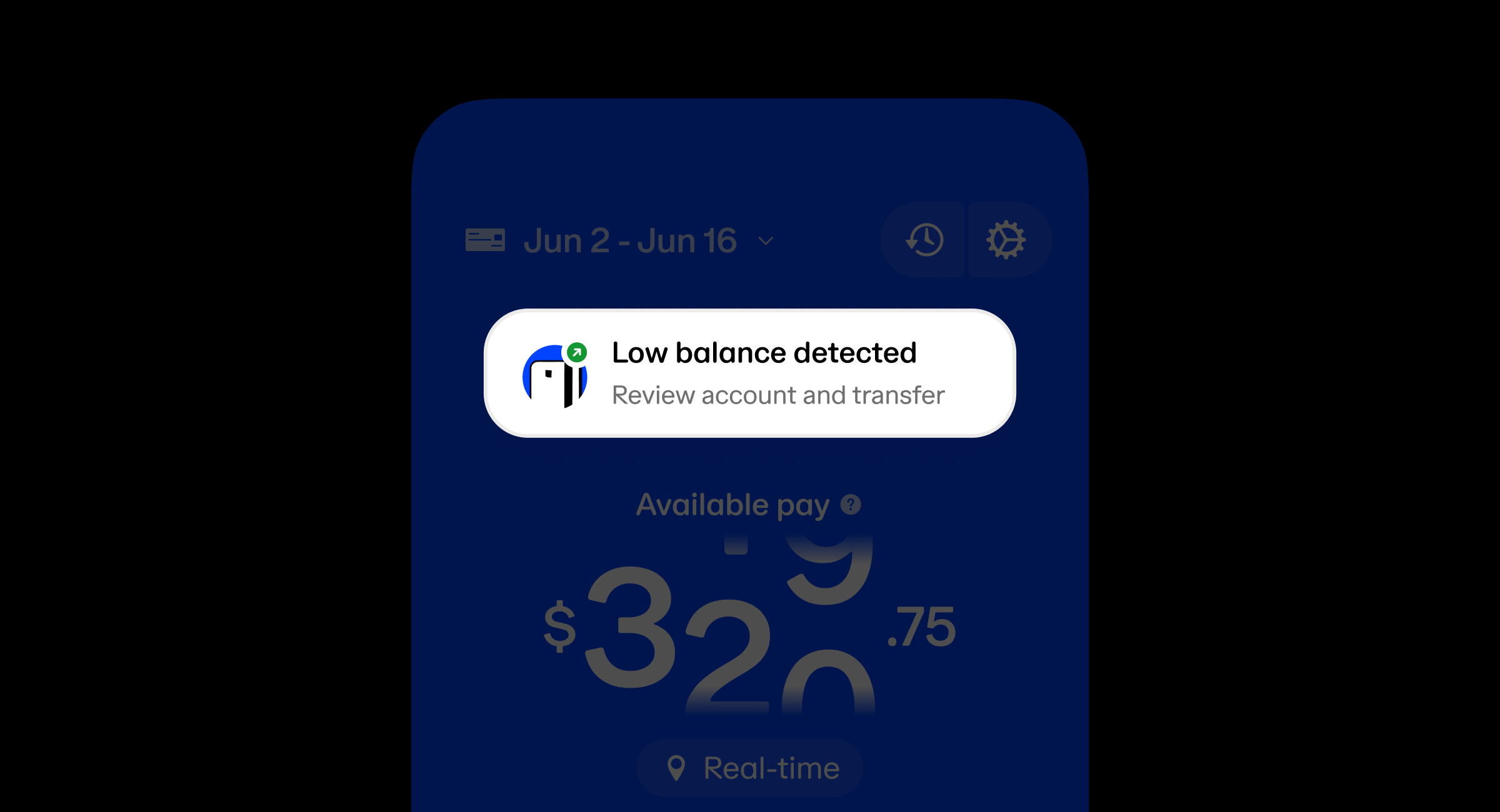
Critically, AI guidance built on employer and employee financial data can also act before a problem occurs rather than after. Flagging that an upcoming paycheck will not cover rent, surfacing an overdraft risk before it becomes a $35 fee, prompting a savings transfer when there is room in the budget, these interventions are more immediately valuable to a financially stressed worker than a quarterly financial review.
For most hourly workers, the realistic choice is not between a human advisor and an AI tool. It is between an AI tool and nothing at all. Framing the comparison as a competition misses that.
The practical argument for benefits leaders is that AI-driven tools and human advisors complement each other. AI handles frequency and availability for cash flow guidance, spending feedback and real-time nudges, while human advisors handle complexity when the stakes are high enough to justify the cost. A program that includes both delivers more comprehensive support than either does alone.
For workforces where most employees cannot access a traditional advisor, the AI layer is not a stopgap. It is the foundation that makes meaningful progress on financial health possible at all. The employer holds a structural advantage here. Payroll integration means access to the earnings data that makes truly personalized guidance possible, something that no consumer financial app can replicate.
That is the right frame for evaluating any financial wellness offering, not whether it matches the capabilities of a CFP for a high-net-worth client, but whether it reaches the number of employees who are most financially stressed, responds to their actual situation, and reduces the downstream costs of financial stress on your workforce.
Rain's AI Financial Health Agent is built around that premise. It combines real-time earned wage data with employees' live financial information to anticipate cash flow gaps, surface spending patterns and guide employees toward more sustainable financial behaviors. It works continuously in the background without requiring employees to seek it out.
To see how it works in practice, book a demo.
© 2026 Rain Technologies Inc.