A flat tire on the way to work can cost $200. An urgent care visit runs $300. A broken phone, for an hourly worker whose shift schedule lives in an app, is both a personal inconvenience and a logistics crisis. None of these are financial catastrophes on their own, but for the majority of American workers, any one of them can set off a chain reaction of late fees, overdraft charges and high-interest borrowing that takes months to rectify. The reason is straightforward. Most people don't have a rainy day fund, and for hourly workers, that gap is especially sharp.
Let’s look at what a rainy day fund is, why the savings shortfall is worse among frontline and hourly workers, and why HR leaders are increasingly treating emergency savings as a workforce issue, not just a personal finance one.
A rainy day fund is money set aside specifically to cover unexpected expenses. Not the regular bills, not planned purchases, but things like a broken appliance, a medical copay or a car repair that can't wait. Unlike a long-term emergency fund, which is typically sized to cover three to six months of living expenses after a job loss, a rainy day fund is a smaller, more accessible cushion for short-term disruptions.
Financial experts often use the two terms interchangeably, but the practical distinction matters for hourly workers in particular. A three-month emergency fund can feel impossibly abstract when you're living paycheck to paycheck. A rainy day fund, targeted at covering one or two unexpected expenses per year, is a more achievable near-term goal.
The savings gap comes down to math, not motivation.
According to Bankrate's 2026 Emergency Savings Report, 24% of Americans have no emergency savings at all, and only 46% have enough saved to cover three months of expenses. A separate U.S. News survey from January 2026 found that 43% of Americans couldn't pay for a $1,000 emergency expense with their savings. We’re not talking about a rare catastrophe, just a single unexpected bill.
Several forces converge here. Inflation has outpaced wage growth for most of the past three years, leaving less margin at the end of each month. Housing costs have consumed a growing share of take-home pay. And for workers paid on a bi-weekly cycle, the timing mismatch between when income arrives and when bills are due creates a cash flow squeeze that makes saving feel impossible even when income is technically sufficient.
The Empower 2025 Safety Net study put it plainly by noting that 58% of Americans say that saving for emergencies feels “almost impossible” with how expensive everything currently is. And 63% said rising costs have made it harder to build or maintain an emergency cushion.
The emergency savings gap is a workforce-wide issue, but the numbers are consistently worse among hourly, shift-based and frontline employees. These workers tend to have less income stability, fewer benefits and less access to financial planning resources than salaried employees.
The math compounds quickly. Hourly workers are more likely to have irregular schedules, meaning income can vary week to week. They're less likely to have paid sick leave, so a missed shift due to illness creates both a health and a cashflow problem at the same time. And they're far less likely to have access to employer-sponsored financial wellness tools that could help them build a savings habit over time. The CAPTRUST 2026 Financial Wellness Survey found that 85% of hospitality-industry employees reported moderate to severe financial stress, the highest rate of any industry sector surveyed.
When a worker without an emergency cushion faces an unexpected expense, the standard options are all expensive. They are often forced to resort to high-interest credit cards, payday loans that can carry annualized rates well above 300%, or borrowing from a retirement account, which triggers penalties. Simply not paying generates fees and credit damage of its own. Each of these outcomes costs more than the original emergency and makes building savings harder going forward.
Rain's own research found that 49.6% of employees say waiting for their next paycheck hurts their focus or attendance at work. An emergency expense in between paychecks doesn't just affect their personal finances. It affects their ability to show up and perform.
Financial stress travels to work. It shows up in absenteeism, distraction, turnover and reduced productivity. The cost to employers is measurable.
The CAPTRUST 2026 Financial Wellness Survey found that 75% of employees say financial stress affects their motivation at work and 62% say it has a moderate to severe impact on their productivity and physical or mental health. The Valoir 2026 Employee Financial Wellness Report estimated that the average employee spends 3.3 hours per week handling personal finances at work, a productivity loss that adds up to roughly $1.1 trillion annually across U.S. employers.
Workers who are financially stressed are not just less engaged. They're more likely to pick up a second job, skip shifts or leave for an employer that pays faster or offers better financial support. Rain's research found that 37.3% of employees have taken a second job just to access pay faster, and 56.6% say they would stay longer at a job that offered faster access to their wages.
Employers who ignore the savings gap don't avoid its costs. They absorb them in turnover, recruitment, absenteeism and lost productivity.
HR leaders are paying attention. The Employee Benefit Research Institute's 2024 Financial Wellbeing Employer Survey found that 77% of firms offer or plan to offer emergency savings benefits within the next year or two. Interest has accelerated since the SECURE 2.0 Act of 2022, federal retirement legislation that expanded savings options for workers, created a formal structure for pension-linked emergency savings accounts (PLESAs) starting in 2024, which allow employers to auto-enroll workers in emergency savings accounts alongside their retirement plans.
But for the majority of hourly workers, who are less likely to have access to a 401(k) in the first place, standalone workplace savings tools are often a more direct path. These work best when they're embedded into the payroll process, reducing friction by automatically setting aside a small amount each pay period without requiring the employee to initiate or remember a separate transfer.
The CAPTRUST survey found that 85% of employees say they want employer-sponsored financial wellness resources, and 98% said they would use a financial advisor if one were available at no cost. The demand is there. The barrier is access and delivery.
What works is making savings the default, not the exception. Automatic enrollment, small starting contributions and easy access to funds in an emergency are the design features that turn intent into actual savings balances.
Rain is an AI financial health platform that helps employers support the financial well-being of their hourly and frontline workforce. The platform is built around three pillars: Stabilize, Control and Grow.
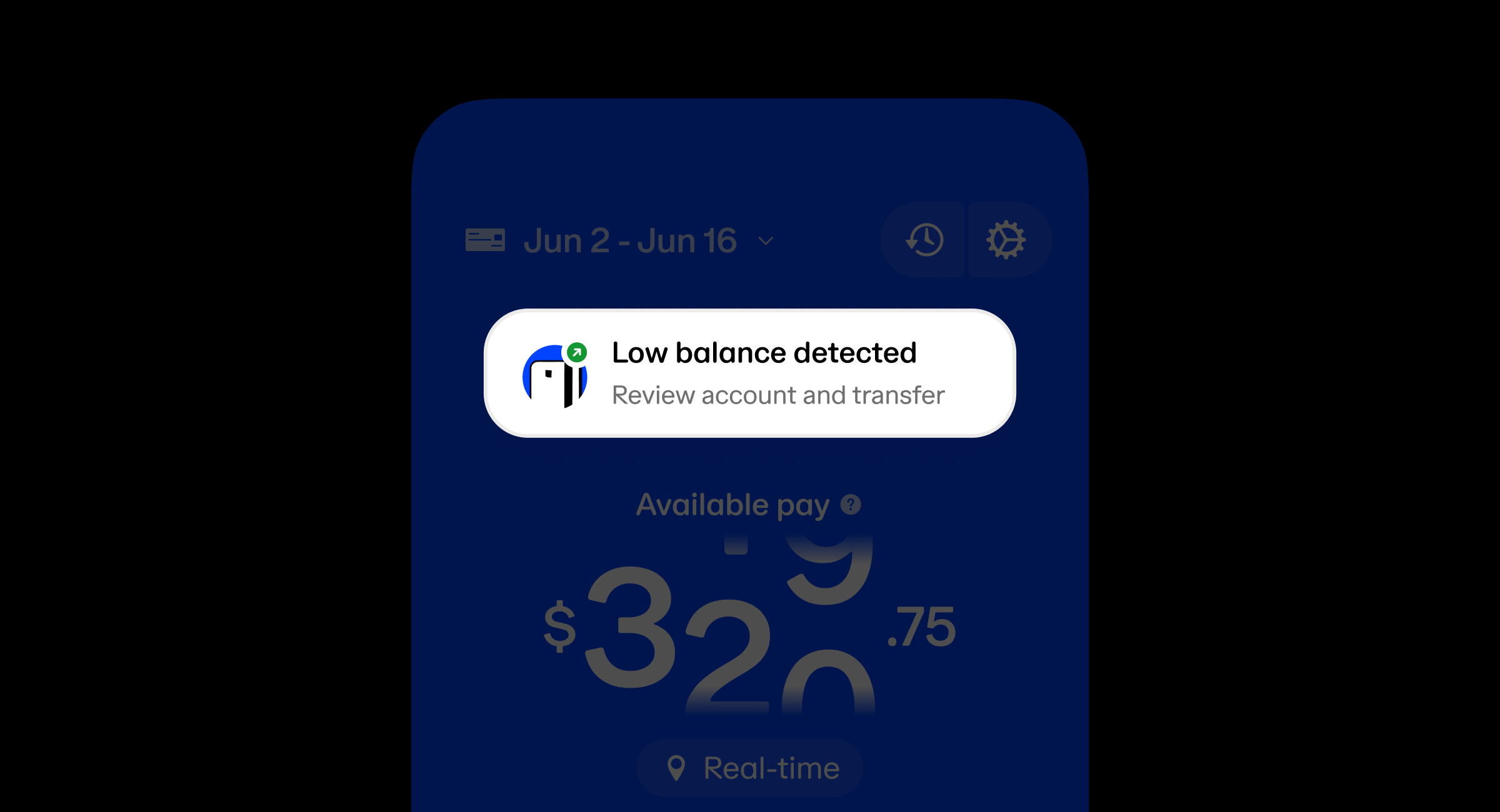
The Rainy Day Savings Fund, launching soon, will allow employees to set aside funds from their Rain Bank Account into a dedicated savings reserve with no additional KYC requirements and no fees. Rain's AI agent will monitor cash flow in real time and prompt employees to save when they have room, making the habit automatic rather than something that requires discipline or planning.
This matters because financial education alone doesn't build savings. Knowing that a rainy day fund is important doesn't close the gap for a worker who ends every pay period with nothing left over. What closes the gap is a tool that spots the moment a small buffer becomes possible and acts on it, without requiring the employee to remember, calculate or initiate anything separately.
Employers who offer Rain gain access to a financial health benefit that reaches into every pillar of their employees' financial lives, with no employer cost. The platform integrates directly into existing payroll and HCM systems, with no process changes required. More than 1,200 employers across health care, manufacturing, hospitality and retail already use Rain, and they consistently see measurable improvements in turnover, attendance and workforce engagement. Book a demo to see how it works.
What is the difference between a rainy day fund and an emergency fund?
The two terms are often used interchangeably, but they describe different scales of financial cushion. A rainy day fund typically covers small, one-off unexpected expenses, such as a car repair, a medical copay or a household bill that comes in higher than expected. An emergency fund is a larger reserve, generally three to six months of living expenses, meant to cover a job loss or major financial disruption. For hourly workers, building a rainy day fund is often the more immediate and achievable first step.
How much should be in a rainy day fund?
Most financial advisors suggest starting with $500 to $1,000 and building toward one month of essential expenses over time. For hourly workers with limited income margin, even a $500 cushion meaningfully reduces reliance on payday loans and overdraft fees.
Why do so few hourly workers have emergency savings?
Irregular income, lack of paid time off and limited access to financial tools all contribute. Hourly workers are also less likely to be covered by employer-sponsored financial wellness programs that could support savings habit formation. When income barely covers essential expenses each pay period, there's no natural opportunity for savings to accumulate without a system that creates that margin automatically.
Can employers help employees build emergency savings?
Yes, and many are starting to. SECURE 2.0 created a formal pathway for employers to offer pension-linked emergency savings accounts alongside retirement plans. Out-of-plan tools, including earned wage access and employer-embedded savings programs, offer additional options for frontline workers who may not have access to a 401(k). The most effective programs use automatic enrollment and payroll integration to reduce friction and make saving the default behavior.
What is Rain's Rainy Day Savings Fund?
Rain's Rainy Day Savings Fund, coming soon, will allow employees to set aside funds from their Rain Bank Account into a dedicated savings reserve. There are no additional fees and no separate account sign-up required. Rain's AI agent monitors each employee's cash flow in real time and will prompt them to save when they have room, automating the behavior rather than relying on manual discipline.
© 2026 Rain Technologies Inc.