Many employers believe they offer financial coaching. Ask them what that means and you'll hear some version of the same answer: a financial wellness portal, maybe a webinar series, access to a third-party counseling line. Something employees can use if they want to.
That's not coaching at scale. That's a resource catalog with a very low usage rate.
The distinction matters because the workforce problems employers are trying to solve, such as financial stress driving turnover, absenteeism and distraction, don't get solved by a benefit employees have to remember to look for when they need it. It gets solved by a system that works whether the employee logs in or not.
The numbers on financial stress at work are by now familiar to most HR leaders. According to the CAPTRUST 2026 Financial Wellness Survey, 75% of employees say financial stress affects their motivation at work and 62% report moderate to severe stress influencing their productivity and physical health. The Valoir 2026 Employee Financial Wellness Report puts the aggregate employer cost at $1.1 trillion annually in lost productivity, roughly 3.3 hours per week per stressed employee.
These numbers are why financial wellness programs exist. The problem is that most programs aren't reaching the people driving those numbers.
CAPTRUST found that 98% of employees said they would use a financial advisor if one were available at no cost. But when given access to that resource, only one in four actually sought financial planning help and one in 10 sought investment advice. The gap between "available" and "used" is enormous, and it's not because employees don't care. It's because the programs are built in a way that requires employees to take the first step, at the right moment, in the right headspace, toward a resource they may not fully trust or understand.
The employees who most need financial coaching are often the least likely to seek it out. They're working a second job, managing a cash shortfall, or too stressed to add another task to their week. A portal doesn't solve that. Awareness campaigns don't solve it either.
Traditional financial coaching programs have a ceiling built into them. One-on-one counseling is valuable, but it doesn't scale. A benefits team can't staff enough human advisors to give every hourly worker a personalized financial review. And even if they could, one annual check-in doesn't change behavior over the other 364 days.
Static digital content has the same problem from the other direction. Financial literacy videos and budgeting calculators exist in a vacuum. They don't know what an individual employee earns, what they spend, when their rent is due or whether they're three days from an overdraft. They give generic guidance to specific people with specific problems, and the conversion from "watched a video" to "changed a financial behavior" is nearly zero.
The real barrier to financial coaching at scale isn't budget or intent. It's that most programs are reactive and opt-in by design. Employees have to want help badly enough to go find it. For the employees who are already financially stable, that works fine. For the employees living paycheck to paycheck, it doesn’t.
Solving this at scale requires a different architecture, not a better version of the same one.
Effective financial coaching at scale has four properties that most employer programs don't have today.
The business case for getting this right is clear. The Morgan Stanley 2025 State of Workplace Financial Benefits Study found that 91% of HR leaders are concerned that inadequate financial benefits will drive attrition, and 59% cited retention as their top priority for the year. Financial stress isn't a side issue. It's showing up on the production floor, in attendance records and in turnover rates.
Employers who implement financial health tools that actually reach employees see measurable results. Reduced turnover, fewer no-shows and a higher number of hours worked are the outcomes that show up consistently in the data because when employees are less financially stressed, they show up differently.
Rain’s "Closing the Pay Timing Gap" report found that 56.6% of employees said they would stay longer at a company that offered pay flexibility and 71.6% of employers reported that pay flexibility reduces turnover. Financial coaching that addresses the underlying cash flow problem, not just the knowledge gap, changes the employment relationship in a real way.
Digital financial coaching, done well, is how you close the gap between the program you have and the one your employees actually need.
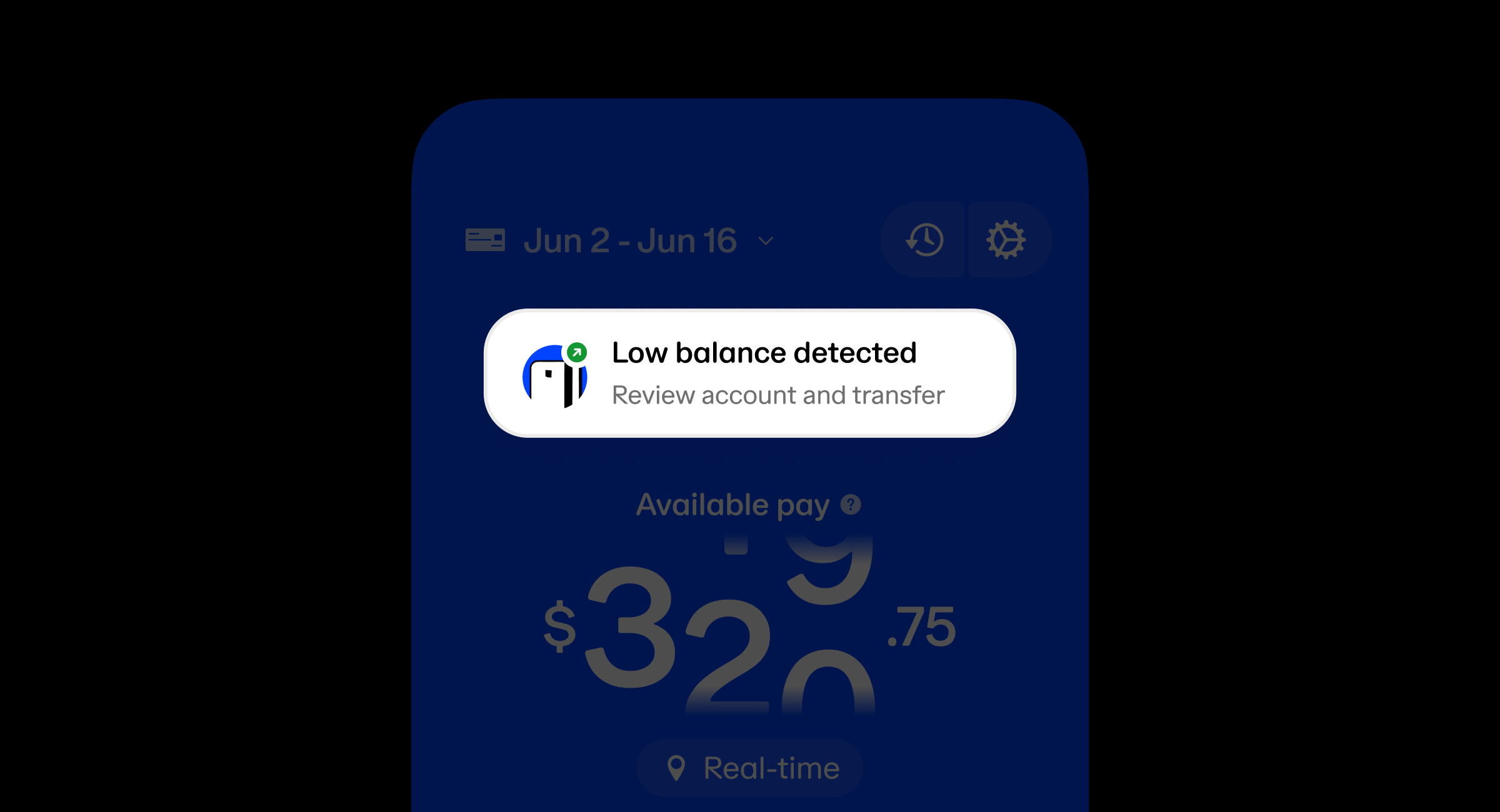
The most effective implementations combine real-time earnings data with an employee's live financial activity, things like spending patterns, account balances and upcoming payment obligations, to deliver guidance that's specific and timely. Rather than asking employees to seek help, the system monitors for risk and surfaces the right intervention at the right moment.
Rain's AI Financial Health Agent works exactly this way. It operates continuously in the background, combining employer payroll and workforce data with each employee's financial data to anticipate cash flow gaps, prevent overdrafts and guide decisions before problems occur. Employees don't have to be in crisis to get value from it. It works on their behalf whether they're thinking about their finances or not.
That's what financial coaching at scale actually looks like: not a resource employees can access, but a system that works whether they log in or not.
If you're evaluating providers, a few questions cut through the noise.
The answers to those questions will tell you whether you're investing in financial coaching at scale or just financial coaching access. For employers trying to improve retention and workforce stability, the difference is significant.
See how Rain's AI Financial Health Agent works for your workforce. Book a demo.
What is financial coaching at scale?
Financial coaching at scale means delivering personalized, proactive financial guidance to every employee, not just the ones who seek it out. It requires systems that are embedded in employees' financial lives, connected to real earnings data and continuous across every pay cycle rather than episodic.
Why do most employer financial coaching programs have low adoption?
Most programs are opt-in by design, requiring employees to seek out help on their own. The employees with the highest financial stress are often the least likely to do so because they lack time, trust or the mental bandwidth to add another task. Programs built on portals and webinars consistently see engagement rates in the single digits among the employees who need them most.
What's the difference between financial wellness and financial coaching at scale?
Financial wellness typically refers to education resources, counseling access and self-service tools. Financial coaching at scale adds proactive, personalized, continuous intervention. The system identifies problems and delivers guidance before employees ask for help, based on their actual financial situation.
What data does scalable financial coaching require?
Effective financial coaching at scale needs access to real-time earnings data, account activity and spending patterns for each employee. Without that, guidance is generic. With it, the system can anticipate cash flow gaps, flag overdraft risk and deliver interventions that are relevant to each employee's specific situation.
How does financial coaching at scale affect employer outcomes?
Research consistently links reduced financial stress to lower turnover, better attendance and higher productivity. Employers implementing financial health tools that reach out to employees, rather than waiting for employees to come to them, see measurable improvements across retention and workforce stability metrics.
© 2026 Rain Technologies Inc.