

If your company offers a 401(k) and participation is still low, you've probably wondered why. You've done the hard part: you set up the plan, you offer a match, you send the reminders. And still, a significant portion of your workforce, especially your hourly employees, aren't enrolling. Understanding why employees don't use 401(k) plans is one of the more underexamined questions in benefits strategy, and the answer might not be what you think.
It isn't apathy. It usually isn't confusion about how the match works. The real barrier for most frontline workers is simpler and harder to solve with a plan document: they can't afford to lock money away when they don't have enough to make it to the next payday.
Low 401(k) participation among hourly workers is a structural problem rooted in cash flow, not engagement. And solving it requires a different set of benefits interventions than most employers are currently offering.
The scale of low 401(k) participation is significant. According to the Bureau of Labor Statistics, 70% of private industry workers had access to a defined contribution retirement plan in 2024, but only 50% participated. Research from the Economic Innovation Group sharpens the picture: 78.7% of workers in the lowest-earning decile lack access to a retirement plan entirely, compared to just 18.2% of workers at the top of the earnings distribution. For the bottom half of the workforce by income, 65.2% have no access at all. The workers most likely to need retirement support are the least likely to have it.
The income-participation correlation is direct. Higher earners participate at much higher rates. Lower-wage workers, the same population that makes up most frontline and hourly workforces, opt out at disproportionate rates not because of indifference, but because the math doesn't work for them right now.
The conventional response to low retirement plan participation is more communication, better onboarding and auto-enrollment features. Those things can move participation numbers, but the underlying problem for most hourly workers never gets touched.
The CAPTRUST 2026 Financial Wellness Survey, which surveyed 4,307 employees across 795 organizations, found that more than 60% of employees report moderate to severe financial stress that influences their work productivity, motivation, physical health and mental health. Nearly half of employees aren't on track toward their short-term financial goals, and only 12% say they're on track toward long-term goals.
The Morgan Stanley 2025 State of Workplace Financial Benefits Study reinforces this: 61% of employees have cut savings contributions because of financial pressure, and 85% of employees say they would feel more invested in their company if it offered financial benefits tailored to their needs. Employees know the match exists and most understand how it works. The problem is that taking home less money isn't a real option when you're already short.
When an employee is choosing between making rent and contributing to a retirement account they can't access for decades, the retirement account loses. They want financial security. They just can't afford to prioritize it when they don't have enough to cover next week.
One of the least-discussed structural reasons for low 401(k) participation among hourly workers is the timing mismatch between when bills are due and when pay arrives. Most workers are paid biweekly, but rent, utilities and unexpected expenses don't coordinate with the payroll calendar.
Rain's "Closing the Pay Timing Gap" report found that 49.6% of hourly workers say waiting for pay hurts their focus or attendance, and 37.3% have taken a second job simply to access pay faster. When employees are working a second job to bridge a cash flow gap, a 401(k) deferral is the last thing on their mind.
Financial literacy isn't what's missing here. These workers understand money. They just don't have enough of it between paychecks. And until employees have enough financial stability to cover their immediate needs, asking them to prioritize retirement contributions means asking them to solve the wrong problem first.
The Valoir 2026 Employee Financial Wellness Report found that the average employee spends 3.3 hours per week managing personal finances at work, translating to an 8% productivity loss and an estimated $1.1 trillion in annual employer costs. Financial stress isn't just a retirement planning issue. It's a performance issue showing up every day on the floor, in clinics and on the production line. The same report found that 1 in 10 employees missed work because of financial stress, which helps explain why asking those same employees to shrink their paycheck, even for a match, is a harder sell than most benefits teams expect.
Auto-enrollment is one of the most effective tools to increase 401(k) participation, and plan sponsors should use it. SECURE 2.0 now requires most newly established 401(k) and 403(b) plans to include automatic enrollment beginning in 2025, and research shows it can raise participation rates by 50 to 67 percentage points. The most notable gains are among younger and lower-income workers.
For workers already stretched thin, though, a smaller first paycheck is often reason enough to opt back out the same week. Auto-enrollment gets employees enrolled, but it doesn't change the financial pressure that got them to that decision.
This is why financial wellness benefits can't exist in isolation. A retirement plan without a broader financial foundation is like building a second floor without a ground floor. Employees need baseline liquidity and stability before they can meaningfully engage with long-term savings goals.
The CAPTRUST data supports this directly: employees who engaged with financial wellness resources were 28% less likely to report high or severe financial stress and 34% more likely to be on track toward both their short- and long-term financial goals.
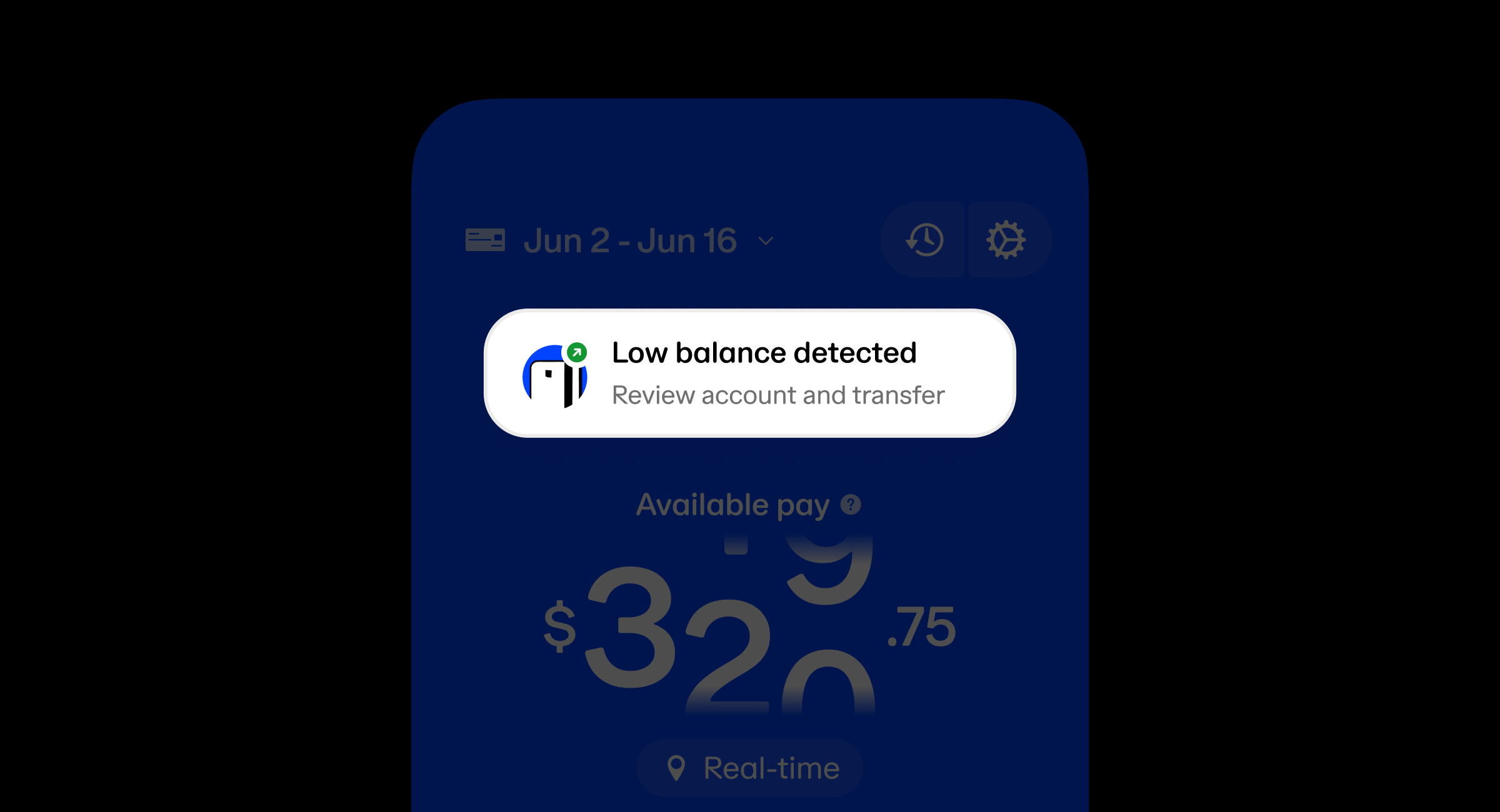
Earned wage access gives employees on-demand access to wages they've already earned, before the scheduled payday. When employees aren't living paycheck to paycheck with nothing to buffer an unexpected expense, the psychological and financial pressure that makes 401(k) contributions feel impossible starts to ease.
A University of Oregon study cited in American Banker found that first-time earned wage access users saw their net monthly income increase by $334, an 11.5% gain, with no corresponding rise in overdraft fees, interest charges or other bank fees. EWA helps employees stop losing money to short-term financial products they turn to when cash runs thin. That's money that could, over time, find its way into a retirement contribution.
Rain's data shows that 56.6% of employees would stay longer at a job that offered pay flexibility. That's relevant to retirement plan participation too: workers who stay longer are more likely to vest, more likely to accumulate balances and more likely to develop the kind of financial stability that makes long-term savings feasible.
Low 401(k) participation among hourly workers is a symptom of a deeper problem: employees don't have enough financial stability to think beyond the next two weeks. Solving it requires benefits that address the ground floor before the second floor.
That means looking at your financial wellness offering as a stack, not a single product. Retirement planning tools are at the top of the stack. But what are you offering employees who are still figuring out how to make rent? Earned wage access, financial coaching, spending visibility and overdraft prevention are what make a retirement contribution feel possible, not just recommended.
The Morgan Stanley study found that 91% of HR leaders are concerned that insufficient financial benefits will lead to increased attrition, and 59% say retention is their top priority. Closing the 401(k) participation gap is ultimately a question of whether your benefits stack actually works for the employees who need it most, and that starts with making sure they can cover today before you ask them to plan for 30 years from now.
Rain helps employers build the financial health foundation that makes benefits like retirement savings actually accessible to hourly workers. Book a demo to learn how Rain is helping employers improve retention, helping employees reduce financial stress and giving them a real path to long-term financial health.
Why don't employees use their 401(k) even when there's a match?
The most common reason employees don't participate in a 401(k), even with an employer match, is cash flow. For hourly and lower-wage workers, reducing take-home pay, even by a small percentage, can create real financial hardship. Employees know the match exists. The problem is that taking home less money isn't a real option when you're already short. A Bankrate 2025 survey found that 58% of workers say their retirement savings are behind where they should be, and for hourly workers already stretched thin, baseline stability has to come before long-term savings planning is even a real conversation.
What is the average 401(k) participation rate for hourly workers?
The scale of low 401(k) participation is significant. According to the Bureau of Labor Statistics, only 51% of the workforce contributed to an employer-sponsored plan in 2021 despite 68% having access to one. Research from the Economic Innovation Group sharpens the picture: 78.7% of workers in the lowest-earning decile lack access to a retirement plan entirely, compared to just 18.2% of workers at the top of the earnings distribution. For the bottom half of the workforce by income, 65.2% have no access at all. The workers most likely to need retirement support are the least likely to have it.
Does auto-enrollment solve low 401(k) participation?
Auto-enrollment significantly improves participation rates and SECURE 2.0 now requires it for most newly established plans beginning in 2025. Research shows it can raise participation by 50 to 67 percentage points, with the biggest gains among younger and lower-income workers. For hourly workers with thin financial margins, though, a smaller paycheck can be reason enough to opt back out within the first pay cycle. Auto-enrollment works best when paired with broader financial wellness support that stabilizes day-to-day finances first.
How does financial stress affect retirement savings?
Financial stress is one of the primary drivers of low retirement savings rates. The Morgan Stanley 2025 State of Workplace Financial Benefits Study found that 61% of employees have already cut savings contributions because of financial pressure. The CAPTRUST 2026 Financial Wellness Survey found that only 12% of employees are on track toward their long-term financial goals. Stress doesn't just affect day-to-day performance. It crowds out the mental and financial bandwidth needed to think about retirement. Employees who receive support for short-term financial stability are 34% more likely to be on track toward long-term goals, according to the same CAPTRUST data.
Can earned wage access help improve 401(k) participation?
Earned wage access reduces the cash flow instability that makes retirement contributions feel unaffordable. When employees can access pay they've already earned between paychecks, they're less likely to turn to high-cost debt, overdraft fees or predatory financial products to cover short-term gaps. A University of Oregon study cited in American Banker found that first-time EWA users saw their net monthly income increase by $334 with no corresponding rise in bank fees or debt costs. That financial breathing room is what makes long-term planning, including retirement saving, more realistic for hourly workers.
What can employers do to increase 401(k) participation among hourly workers?
The most effective approach combines structural plan design improvements with broader financial health support. On the plan side, that means implementing auto-enrollment, lowering eligibility waiting periods and ensuring the match is competitive. On the financial wellness side, it means addressing the cash flow instability that prevents hourly workers from participating in the first place: earned wage access, financial coaching, spending visibility tools and overdraft prevention. Employees who have support for both short-term cash flow and long-term planning are significantly more likely to participate in retirement benefits.
© 2026 Rain Technologies Inc.