Financial shame is one of the least talked-about reasons why financial health programs fail. Employees know they should budget. They know they’re spending too much on takeout or falling behind on bills. What they don’t know is how to fix it without someone making them feel bad in the process.
Traditional tools weren’t built for this. A generic budgeting app doesn’t know that an employee picked up three extra shifts this week, or that their rent hits on a different cycle than their paycheck. It just surfaces a red bar labeled “overspending” with no context and no path forward. It surfaces information, but it doesn’t help change anything.
The gap between knowing and doing is where most financial health programs die. Telling someone they need to save more when they can’t cover their bills this week isn’t useful.
When people feel judged about money, they disengage. They stop checking their balances. They avoid the apps. They ignore the reminders. The stress of knowing they’re behind is compounding, but the tools designed to help are adding to that stress.
According to CAPTRUST’s 2026 Financial Wellness Survey, more than half of employees experiencing financial stress say it shows up physically, mentally or both. People under that kind of pressure have less bandwidth for long-term planning. Putting a complex dashboard in front of someone trying to figure out if they can make rent doesn’t help. It overwhelms them.
This is the design flaw at the center of most financial health tools. They assume the user has the time, the mental space and the motivation to engage. Most frontline workers have none of those things at the moment they need help most.
An AI spending coach built for the actual conditions of a frontline worker’s financial life doesn’t start with a lecture. It starts with the data it already has.
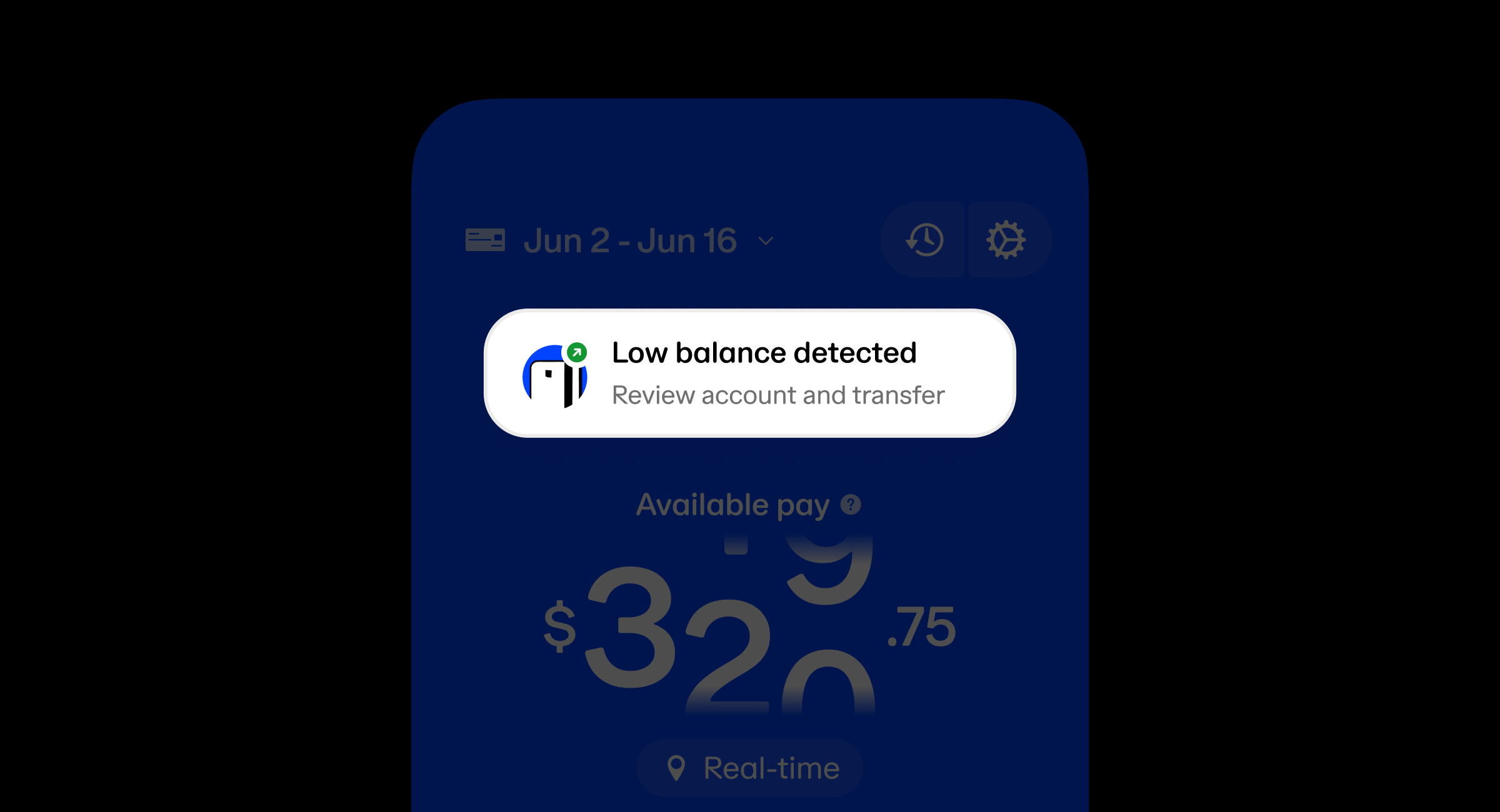
Rain’s AI Financial Health Agent connects to an employee’s earned wages in real time and to their actual financial data. It sees when a balance is running low before the employee does. It flags the risk, suggests an action, and waits for the employee to approve it. The employee gets a heads-up before the fee hits, not a notification after the fact.
This matters because the intervention is happening before the crisis occurs, not after. The overdraft fee hasn’t hit yet. The late payment hasn’t happened. The employee isn’t already in a hole when the help arrives.
According to Rain’s “Closing the Pay Timing Gap” report, 49.6% of hourly workers say waiting for pay hurts their focus or attendance. Most financial apps weren’t built for the gap between a bi-weekly paycheck and a monthly rent bill. That’s a structural problem, and ignoring it explains most of what gets labeled as a “motivation problem.”
Behavioral finance research has spent years documenting why people make financially suboptimal decisions under stress. The answer usually isn’t lack of willpower or lack of knowledge. It’s system design. The systems around people create the conditions for good or bad decisions.
A paycheck that comes every two weeks doesn’t align with a rent bill that comes once a month. An employee who doesn’t have the cash for an unexpected car repair shouldn’t have to choose between a payday loan and missing work. These are structural problems, and AI that understands the structure can work around them in ways that a passive educational portal never can.
The same CAPTRUST survey found that 75% of employees say financial stress affects their work motivation, and 62% report moderate to severe stress that influences productivity and health. The demand for help is there. The barrier is the delivery model.
Employees aren’t disengaged because they don’t care. They’re disengaged because the tools available require them to do a lot of work in exchange for information they could have figured out themselves.
Most employers frame this as an education problem. If employees just understood budgeting better, the thinking goes, they’d make better decisions. But the Morgan Stanley 2025 State of Workplace Financial Benefits Study found that 74% of employees already want employer financial assistance. The demand is clear. What’s missing is a tool that meets employees where they actually are.
An AI spending coach does that. It doesn’t ask the employee to learn a new system or find time in their day to engage with an educational module. It works in the background, monitors what’s happening, and steps in only when it’s relevant. That’s a design choice that respects the reality of a frontline worker’s day.
If your financial health program is built around content and education, you have a utilization problem waiting for you. The Valoir 2026 Employee Financial Wellness Report found that employees spend an average of 3.3 hours per week on personal finances at work, an 8% productivity loss that translates to $1.1 trillion annually in employer costs. That’s not a population that lacks awareness of their financial stress. That’s a population that doesn’t have a good tool to do something about it.
An AI spending coach that works proactively, uses real payroll and earnings data, and intervenes before the crisis rather than after, isn’t just a better product for employees. It’s a measurable business case. Lower financial stress means fewer missed shifts, better attendance and lower turnover. The Morgan Stanley study found that 91% of HR leaders worry that financial stress is driving attrition. That number should change the conversation about what financial health technology is actually supposed to do.
Employees don’t need encouragement. They need a tool that works before the problem lands — one that doesn’t require them to feel ashamed before it kicks in.
Want to learn more about Rain’s AI Financial Health Agent? See how Rain’s AI Financial Health Agent works →
What is an AI spending coach for employees?
An AI spending coach is a tool that monitors an employee’s financial data in real time and proactively flags issues and suggests actions before problems occur. Unlike a budgeting app, which requires the employee to log in and review their own data, an AI spending coach works in the background and steps in when something needs attention. Rain’s AI Financial Health Agent connects to real earnings data from the employer’s payroll system, so the guidance it offers is based on each employee’s actual financial situation.
Why do employees disengage from financial health programs?
Low engagement usually points to a design problem. CAPTRUST’s 2026 Financial Wellness Survey found that 98% of employees would use a financial advisor if one were available at no cost, but only 25% actually seek financial planning help when given access. Tools that require employees to self-initiate, navigate a complex interface, or sit through educational content add friction at the exact moment employees have the least capacity to deal with it.
How does financial shame affect employee behavior at work?
Financial shame drives avoidance. Employees who feel judged about their spending or savings habits stop engaging with the tools meant to help them, which compounds the problem. In CAPTRUST’s 2026 Financial Wellness Survey, more than half of employees experiencing financial stress say it shows up physically, mentally or both. Tools that surface problems without providing a path to fix them tend to increase that stress rather than reduce it.
What makes AI-powered financial health tools different from traditional ones?
Traditional financial health tools show employees what already happened and expect them to act on it. Rain’s Financial Health Agent monitors real-time earnings and spending data, identifies risk before it becomes a problem, and offers a specific recommended action. The employee only needs to approve it. That’s what drives actual outcomes rather than just engagement metrics.
How does earned wage access reduce financial stress?
Earned wage access lets employees access pay they’ve already earned before their scheduled payday, which addresses the cash flow timing problem at the root of most financial stress. When a bill comes due before a paycheck arrives, employees typically turn to overdrafts, credit, payday loans, or a second job. Rain’s “Closing the Pay Timing Gap” research found that 49.6% of hourly workers say waiting for pay hurts their focus or attendance. Earned wage access removes that gap without requiring employees to take on debt.
© 2026 Rain Technologies Inc.